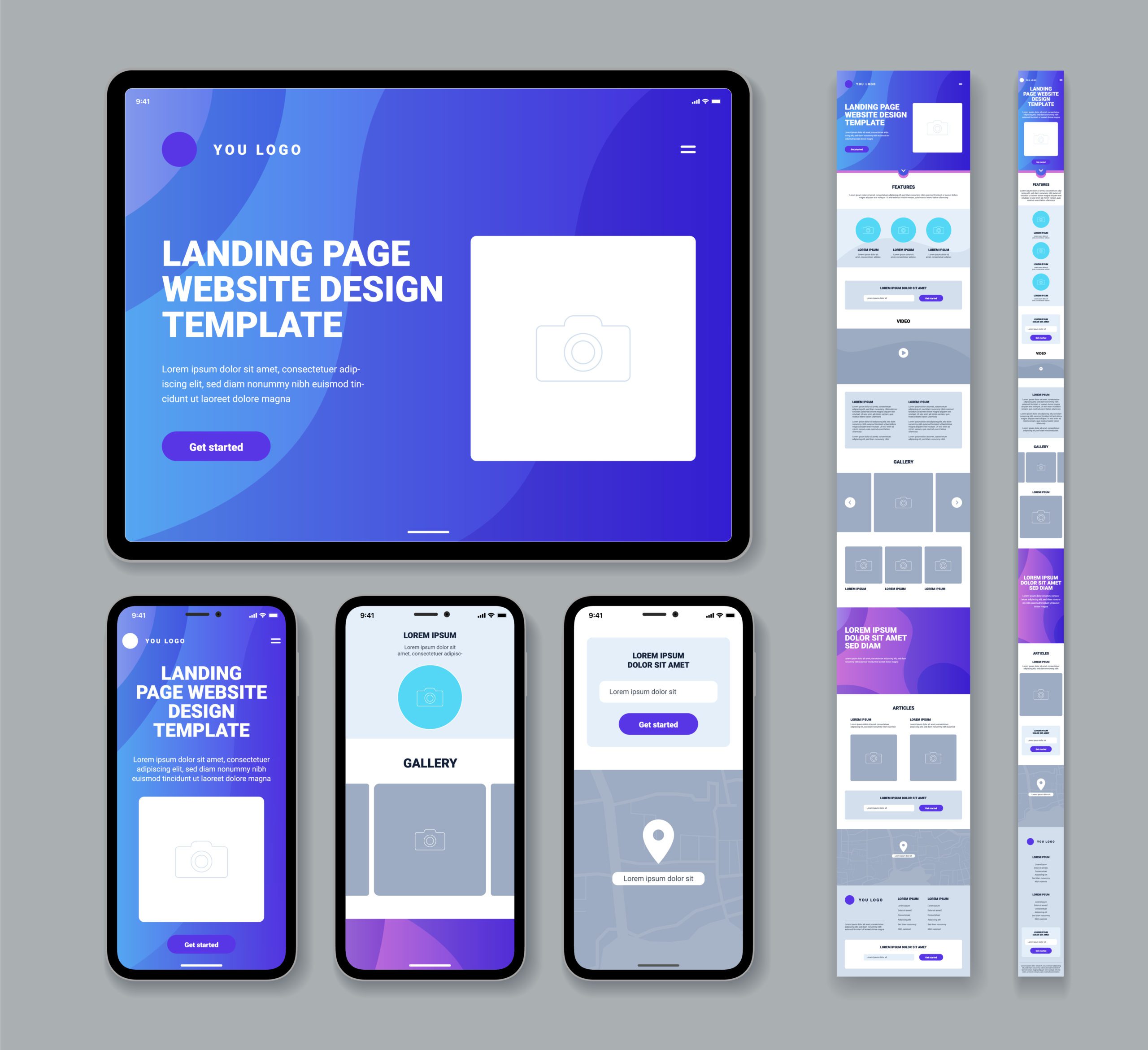
In today’s digital age, user experience has become the heart of web design. A well-designed website emphasizes user experience, providing a seamless, intuitive, and engaging user journey that can boost conversion rates. From visual elements to design decisions, everything must cater to the user’s needs and preferences.
The user experience of a website can be the difference between a successful online presence and a failed one. A positive and engaging user experience is critical to the success of any website as it can help build trust with potential customers, improve engagement and reduce bounce rates. However, achieving such a user experience requires careful attention to various web design practices that go beyond just aesthetics.
In the following sections, we will explore five essential web design practices that are instrumental in creating an engaging user experience. Each practice plays a vital role in enhancing usability, functionality, and overall satisfaction for website visitors. By implementing these practices, you can elevate your website’s performance and ensure that users not only stay but also actively engage with your content.
Let’s dive into the key web design practices that can transform your website into a captivating platform, leaving a lasting impression on your users.
1. Simplicity
Simplicity is a vital aspect of web design for an engaging user experience. A minimalistic approach to design can provide several benefits that enhance the usability of a website. By using a limited color palette, easily legible typefaces, and only necessary graphics, a website can have a clean and approachable design.
Additionally, simplicity helps ensure that potential customers can quickly and easily navigate a website. The use of a consistent design helps users understand a website’s hierarchy and assists in guiding them through the site.
When designing a website, it’s essential to keep the user in mind. A simple and intuitive design can significantly impact the user’s satisfaction and experience. With fewer distractions and cognitive load, users can focus on the content and actions necessary to fulfill their objectives.
Moreover, simplicity in web design can improve loading times, especially for mobile users with small screen sizes and slower connections. This can reduce the bounce rate and improve conversion rates.
All in all, simplicity is key to creating a positive experience for real users. A focus on simplicity can help websites stand out while avoiding overwhelming users. Therefore, a website should be designed to prioritize essential elements and avoid unnecessary elements to provide maximum user satisfaction.
Having established the significance of user experience in web design, we can now turn to one of the most foundational principles of web design: consistency. Consistency plays a pivotal role in creating a cohesive and familiar experience for users, allowing them to navigate your website with ease and confidence.
2. Consistency
Consistency is a crucial aspect of web design that can greatly impact usability and user experience. When design elements, visual style, and navigation are consistent, users are able to easily navigate and understand a website, regardless of which page they land on. This can ultimately lead to increased user satisfaction and improved conversion rates.
To achieve consistency, it’s important to establish a set of design principles and stick to them throughout the entire design process. This includes using consistent color schemes, typography, and visual elements such as buttons and icons. By maintaining visual harmony, users can quickly establish mental patterns and associations, allowing them to navigate your website with confidence.
Another important aspect of consistency lies in the navigation structure of your website. Users should be able to rely on a consistent and predictable menu system across all pages. This means using the same menu structures, organizing categories and subcategories consistently, and ensuring that links lead to the expected destinations. By providing a familiar navigation experience, users can effortlessly explore your website and find the information or products they seek.
Consistency should also extend beyond a single website and be maintained across all channels, including social media and email marketing. By utilizing the same visual style, language, and brand elements across different touchpoints, you reinforce your brand identity and create a cohesive user experience. This helps users recognize and interact with your brand effortlessly, regardless of where they encounter it.
In summary, consistency in web design is critical for creating a positive user experience and achieving business goals. By establishing and maintaining consistent design elements, visual style, and navigation, designers can ensure that users are able to easily navigate and understand a website, leading to increased user satisfaction and improved conversion rates.
3. Conventionality
Conventionality is critical in web design, as it provides a sense of familiarity and comfort for users. Common conventions, such as the placement of navigation menus and clickable logos, have become standard expectations for website visitors. These conventions make it easier for users to navigate a website and find the information they are looking for quickly. Maintaining these established norms is important, as it allows users to focus on the content of the site rather than figuring out its structure.
To stick to conventionality, web designers can follow several best practices:
- Navigation Placement: Place the main navigation menu in a consistent and easily accessible location, typically at the top of the page or in a sidebar. Users have become accustomed to this placement, and deviating from it may confuse or frustrate them. Additionally, including a clickable logo that leads back to the homepage is a widely recognized convention that helps users navigate back to the main page effortlessly.
- Standardized Icons and Buttons: Utilize familiar icons and buttons for common actions, such as a magnifying glass for search, a shopping cart for e-commerce, or a hamburger menu for mobile navigation. Using standardized icons ensures that users can quickly recognize and understand their purpose, enhancing the overall usability of the website.
- Consistent Layout: Maintain a consistent layout throughout the website to create a cohesive user experience. Keep similar content elements, such as headers, subheadings, and paragraphs, formatted consistently across pages. This allows users to easily scan and comprehend the information presented, reducing cognitive load.
- Intuitive Forms: Stick to conventional form design by placing labels above or beside input fields and using clear, concise instructions. This approach makes it easier for users to understand and complete forms without confusion or errors.
While adhering to conventions is essential, it doesn’t mean that creativity should be sacrificed. Web designers can still think outside of the box and create a memorable user experience while staying within the bounds of conventionality. For example, they can use innovative color schemes and visual elements to enhance the look of a site while still maintaining a functional and easily navigable layout. By infusing creativity into the design while respecting user expectations, web designers can strike a balance between conventionality and originality, resulting in a website that captivates users while providing them with a seamless and intuitive experience.
With the help of familiarities in web design, web designers can leverage conventionality to create user-centric designs that instill a sense of familiarity, facilitate easy navigation, and allow users to focus on the content and goals of the website.
4. Accessibility
Accessibility is a crucial aspect of web design that should never be overlooked. In fact, it can make or break the user experience of a website. Designers must ensure that every user, regardless of their abilities or disabilities, can fully interact with and enjoy a website. This applies to people with visual, auditory or physical impairments, as well as those with cognitive limitations.
To create an accessible website, designers should consider several best practices. These include the use of alt tags for images, proper color choices, and clear typography. Designers should also ensure that navigation menus and action buttons are easy to locate and use, and avoid using elements that can cause cognitive overload.
Another crucial thing to consider is the use of assistive technology. This includes the use of screen readers, which can translate the content of a website into audio that enables visually impaired users to understand and navigate the site. Designers should also ensure that a website is optimized for assistive technologies and that it meets accessibility standards.
Designers should also make the transition to mobile-responsive design that can easily adapt to different screen sizes and orientations. Accessibility features for mobile devices can help ensure that mobile users with disabilities can easily access a website’s content.
Usability testing is another key step towards creating an accessible website. By testing the website with real users, designers can identify potential accessibility issues and address them before the website is launched. This can ultimately lead to a positive experience for users, who will appreciate and return to a website that is easier to use.
In conclusion, ensuring that a website is accessible should be an integral part of the web design process. This includes considering the needs of users with disabilities and using accessibility standards to guide design decisions. By following these best practices, designers can create a more inclusive and engaging user experience.
5. Visuals, Media & Call-To-Actions
Visuals, media, and call-to-actions (CTAs) play a critical role in creating a user experience that engages and converts potential customers. The use of images, videos, and graphics can significantly enhance the visual appeal of a website, making it more memorable and increasing the likelihood of users returning to the site. Furthermore, by providing relevant and informative multimedia content, websites can also establish credibility and trust with their target audience.
CTAs are equally essential as they encourage user engagement and drive conversions, helping to guide users through the sales funnel. They need to be clear and visible, guiding users toward a particular action, such as making a purchase, downloading valuable content, or simply subscribing to a newsletter.
When incorporating visuals and media, it is vital to consider elements like consistency and relevance. Consistency preserves the overall theme and message of the website, while relevance ensures all visual elements align with the website’s objective.
Having effective visuals, media, and CTAs can have a massive impact on user satisfaction and conversion rates. By providing a positive experience, a website can differentiate itself from competitors, build brand loyalty, and ultimately increase revenue.
Conclusion
In conclusion, every piece of web design plays a crucial role in determining the user experience of a website. It is essential to keep user satisfaction and a positive experience at the forefront of design decisions. Creating engaging websites that prioritize the needs of potential customers can make a huge difference in conversion rates and bounce rates.
Design principles such as consistent design, visual elements, and color choice can greatly impact the presentation of information and overall user experience. Similarly, the navigation menu, search bar, and action buttons can contribute to easy navigation and usability.
Furthermore, an increasing number of users access websites through mobile devices, making responsive design and mobile design crucial components of web design. Accessibility standards and assistive technology must also be considered for an inclusive web experience for all users.
Usability testing with real users can provide valuable insights into the effectiveness of a website’s design and loading speed. In summary, implementing these essential web design best practices can lead to a positive user experience, ultimately resulting in increased engagement and sales funnel success.